
Dealing with Dust & Climate Challenges in Oxford Mississippi
If you’ve lived in Oxford for more than one full year, you already know the feeling. Sometime around mid-June, you walk into your bathroom and catch that faint musty smell that wasn’t there in April. Or you step onto your front porch on a Tuesday morning in March and find your outdoor furniture coated in a thick yellow-green film that appeared overnight. Neither of these things is a sign that you’re a bad housekeeper. They’re signs that you live in North Mississippi.
Oxford sits in a humid subtropical climate zone, and that classification carries real consequences for the inside of your home. Between the suffocating summer humidity and one of the more aggressive spring pollen seasons in the region, Oxford homeowners are up against two distinct seasonal threats that require two very different responses. Understanding what’s actually happening in your home during each season, and knowing what to do about it, goes a long way toward keeping things clean, healthy, and under control.
Why Oxford’s Climate Is Harder on Your Home Than You Might Think
Lafayette County doesn’t just feel humid in the summer. It is measurably, consistently humid, with relative humidity levels that routinely sit between 70 and 85 percent during peak months. Add to that the dense tree canopy throughout Oxford and the surrounding area, along with the proximity to Sardis Lake, and you have local conditions that hold moisture in ways that drier climates simply don’t.
Spring brings a different problem. Oxford sits in a part of Mississippi where tree pollen season kicks off as early as February with cedar and juniper, peaks hard through March and April with oak, and rolls into grass pollen season by May. Bermuda grass, which is planted throughout Lafayette County in lawns and athletic fields alike, becomes a significant contributor from late spring into early summer. The result is a pollen window that stretches across nearly four months without much of a break.
These aren’t just outdoor inconveniences. Both humidity and pollen find their way inside, and once they’re in, they create problems that don’t resolve on their own.
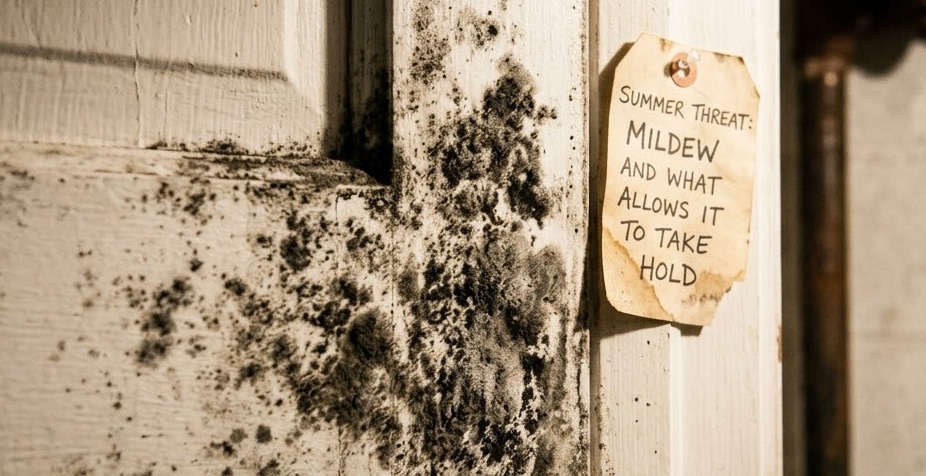
The Summer Threat: Mildew and What Allows It to Take Hold
Mildew is one of those things that seems like it appears out of nowhere, but it never actually does. It needs three things to grow: a surface, warmth, and moisture. Oxford summers provide warmth and moisture in abundance, which means the only variable you have real control over is how well you manage moisture inside your home.
The danger window typically runs from June through September. During those months, outdoor humidity levels stay high enough that even a well-maintained HVAC system has to work hard to keep indoor humidity in a safe range. The generally accepted safe threshold is below 50 percent relative humidity indoors. When that number climbs consistently above 60 percent, mildew doesn’t just become possible — it becomes likely on certain surfaces.
The Rooms That Need the Most Attention
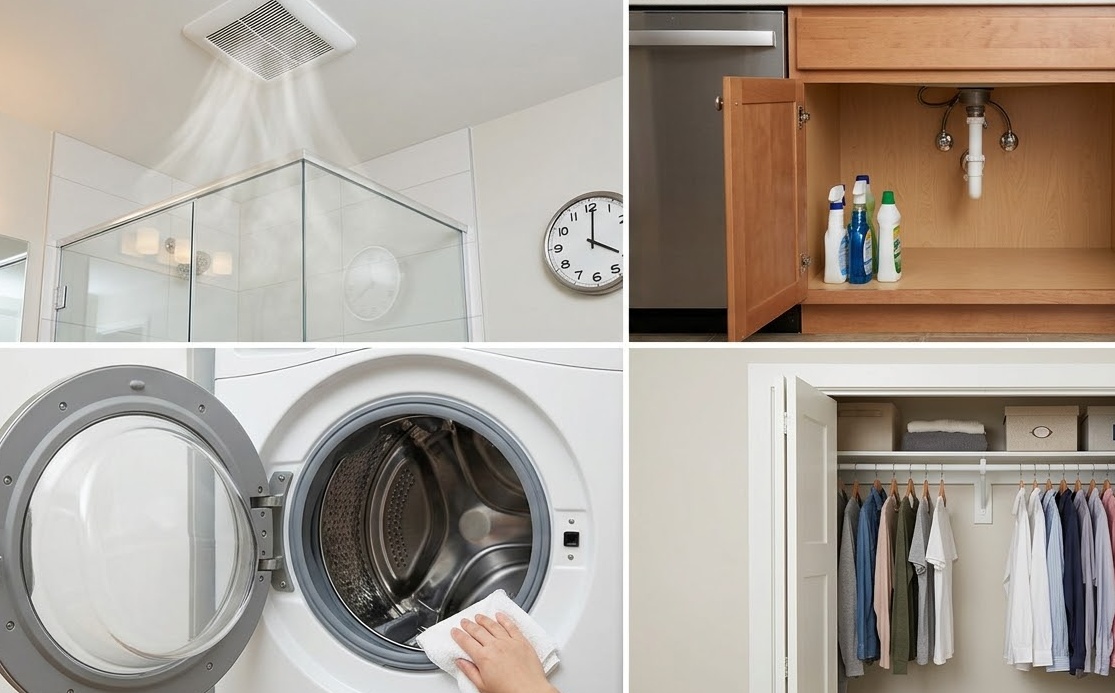
Bathrooms are the most obvious target, and for good reason. Every shower generates a significant amount of steam, and if that moisture doesn’t have a fast exit route, it settles into grout lines, silicone caulk, the folds of a shower curtain liner, and the ceiling above the tub. The exhaust fan is your first line of defense here, and it needs to run not just during the shower but for at least 20 minutes after. Most people turn it off the moment they step out. That’s exactly when it matters most.
Kitchens are the less-discussed culprit. The area under the sink, the wall behind the refrigerator, and the seals around windows above the sink are all spots that stay consistently damp and poorly ventilated. A slow drip under a cabinet that you’ve been meaning to fix for two weeks is all it takes for mildew to establish itself in the wood and drywall.
Laundry rooms deserve attention, particularly if you have a front-loading washing machine. The rubber gasket around the door of a front-loader traps moisture and detergent residue after every single cycle, and it’s a well-known breeding ground for mildew. Leaving the door open between washes helps, but the gasket still needs to be wiped down regularly.
Closets along exterior walls are easy to overlook. When the wall on the other side is exposed to summer heat and humidity, the interior surface of that wall inside the closet can stay noticeably cooler than the surrounding air. That temperature difference causes condensation, and that condensation feeds mildew on clothing, storage boxes, and the wall itself. Leaving the closet door cracked open to allow air circulation is a simple fix that makes a real difference.

What to Do Week to Week
Staying ahead of mildew in an Oxford summer is less about deep-cleaning and more about consistent small habits. Bathroom exhaust fans need to run long enough to actually clear steam, not just for a few minutes. Wet towels, gym clothes, and damp bath mats left in piles are a reliable way to end up with a mildew problem in places you’d rather not. Shower curtain liners should be washed monthly from June through September.
A humidity monitor is one of the cheapest and most useful tools an Oxford homeowner can own. They run around fifteen to twenty dollars at most hardware stores and give you a real-time reading of what’s happening inside each room. If a bathroom or laundry room is consistently reading above 55 percent even with the HVAC running, a portable dehumidifier in that room will do more good than any cleaning product.
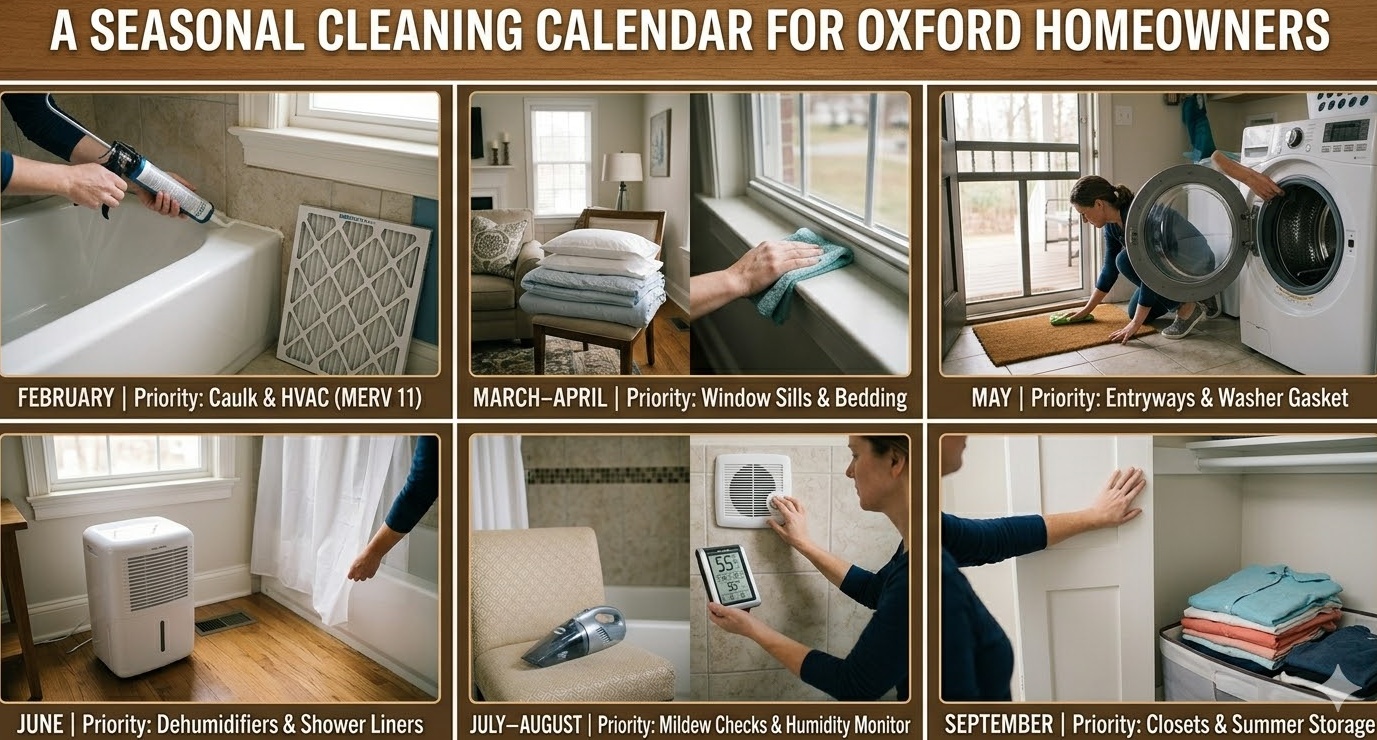
Before summer arrives, it’s worth doing a quick inspection of caulk lines around tubs, sinks, and windows. Caulk that’s cracked or pulled away from the surface is no longer doing its job, and those gaps are exactly where moisture seeps in. Recaulking once a year before the humid season starts is straightforward maintenance that pays for itself many times over.
If You Already Have Mildew
Surface mildew, the kind that shows up as gray or pinkish staining on grout or caulk, can usually be treated at home. White vinegar in a spray bottle, left to sit for an hour before scrubbing, works well on tile and non-porous surfaces. Hydrogen peroxide is another effective option. What you want to avoid is using bleach on grout repeatedly, as it degrades the grout over time, or scrubbing porous surfaces like unsealed drywall, which tends to push the mildew deeper rather than remove it.
More importantly, visible mildew is a symptom, not the actual problem. If the same spot keeps coming back within a few weeks of treating it, the source of moisture hasn’t been addressed. That’s when it’s worth bringing in professional help, not just for the cleaning, but to figure out what’s actually feeding the problem.

The Spring Threat: Pollen and How It Gets Into Everything
Pollen in Oxford isn’t a background nuisance. It’s an event. If you’ve walked to your car on a still morning in early April and found the windshield completely coated in yellowish dust, you have a sense of the volume involved. What’s less obvious is how much of that pollen is making its way into your home and settling on surfaces where it can trigger allergy symptoms for weeks.
The pollen season here runs in overlapping waves. Tree pollen starts as early as February and doesn’t really wind down until late April. Grass pollen follows closely behind, peaking in May and June. There’s also a secondary wave of weed pollen that comes in late summer and early fall, which catches a lot of people off guard after they’ve let their guard down. For households with allergy sufferers, the effective season runs from February through October with only a brief break in the middle.
Pollen enters your home through every available opening: doors, windows, HVAC intakes, and attached garages. It also comes in on clothing, shoes, and pets. A dog that has been outside for 30 minutes during peak pollen season is carrying a significant pollen load on its coat, and that pollen transfers directly to floors, upholstery, and bedding the moment the dog comes inside.
Where Pollen Accumulates Inside
Window sills and window tracks are among the highest-accumulation spots in a home during spring. Most people clean the glass but ignore the track, which collects pollen, dust, and debris in a way that’s almost invisible until you actually look closely. During March and April, these tracks should be wiped out at least once a week.
HVAC return vents are another major collection point. Air is constantly being pulled through those vents from inside the house, and pollen that’s circulating in the air gets caught on the vent cover and, more critically, on the filter. Standard fiberglass HVAC filters don’t capture fine pollen particles effectively. Upgrading to a MERV 11 or MERV 13 rated filter during pollen season and changing it monthly makes a measurable difference in indoor air quality.
Ceiling fans are easy to overlook because most people don’t look up. The top of each blade accumulates a layer of dust and pollen that then gets dispersed throughout the room every time the fan is turned on. Wiping down fan blades before running the fan at the start of spring is a small task that prevents a larger one.
Upholstered furniture near windows or exterior doors picks up pollen from the air and from people and pets sitting on it regularly. During peak season, vacuuming upholstered surfaces once a week matters more than most people realize. Oxford cleaners who specialize in seasonal deep cleaning often cite upholstery as one of the most overlooked pollen traps in a home.

Keeping Pollen Out and Cleaning It Up Correctly
The most effective prevention during peak pollen days is keeping windows closed and relying on your HVAC system to filter incoming air rather than pulling in unfiltered outdoor air. Local pollen count information is available through Weather.com, and checking it before opening windows in the morning is a habit worth developing.
Removing shoes at the door eliminates a significant pollen pathway into the home. A dedicated entry mat at every exterior door, combined with a place to leave shoes in a mudroom or entryway, keeps a lot of the outdoor pollen load from making it past the threshold.
Technique matters more than most people think when it comes to cleaning for pollen. Dry dusting with a feather duster or a dry cloth just redistributes pollen into the air, where it stays suspended for several minutes before settling right back onto surfaces. Damp microfiber cloths trap and hold pollen rather than moving it around. The same principle applies to vacuuming: always clean top-to-bottom and vacuum last, so any pollen that gets knocked down during wiping gets picked up at the final step rather than redistributed.
Bedding is particularly important during pollen season. If you’re sleeping on sheets and pillowcases that haven’t been washed in two weeks, you’re spending eight hours in direct contact with whatever pollen has accumulated on them. Washing bedding weekly in hot water during March through May, and showering at night rather than in the morning, significantly reduces the amount of pollen that transfers to bedding from skin and hair.
When Both Problems Overlap
There’s a stretch in late May and into early June when humidity starts climbing at the same time grass pollen season is still active. This overlap creates a specific problem that’s worth knowing about. High humidity causes pollen to clump and stick to surfaces rather than dusting off easily, which makes it harder to remove and more likely to stay put if you don’t use the right technique.
Entryways, screened porches, mudrooms, and attached garages take the hardest hit during this window. These are transitional spaces that are neither fully inside nor fully outside, and they collect both pollen and moisture without the benefit of full climate control. A thorough cleaning of these areas in late May, before peak summer humidity sets in, is one of the highest-value cleaning tasks of the entire year.
When to Call a Professional
There are times when staying on top of Oxford’s climate challenges is manageable with consistent home maintenance. And there are times when it isn’t. If you’re treating the same mildew spot every few weeks and it keeps coming back, or if there’s a persistent musty odor somewhere in your home that doesn’t clear up after cleaning, or if you’re seeing dark spotting on walls or ceilings, those are signs that the problem has gotten beyond surface-level.
A professional cleaning service can bring commercial-grade equipment, stronger treatment products, and trained eyes for spotting the less obvious sources of moisture and buildup. If your home needs a full pollen purge at the start of spring or a thorough mildew treatment heading into fall, that’s exactly the kind of work where professional help pays for itself.
Closing Thoughts
Oxford is a genuinely beautiful place to live, and a lot of that has to do with the trees, the greenery, and the lush surroundings that the humid climate produces. That same climate, though, comes with a maintenance cost, and the homeowners who stay ahead of it are the ones who understand that prevention is almost always cheaper and easier than remediation.
Pick one thing from this article and do it today. Check whether your bathroom exhaust fan is actually venting air to the outside and not just recirculating it into the attic. Pick up a humidity monitor and see what your laundry room is actually reading on a July afternoon. Wipe down your window tracks before pollen season peaks. These small actions compound over a season, and they’re the difference between a home that stays clean and one that you’re constantly trying to catch up on.