


April 7, 2026 by justin davis

Decoding Cleaning Product Labels and Understanding Greenwashing in 2026
Walking down the cleaning aisle of a modern grocery store can feel like a stroll through a high-tech garden. Bright green bottles, images of dew-covered leaves, and slogans promising “pure” or “earth-safe” ingredients compete for your attention. In 2026, the marketing of sustainability has reached a fever pitch. However, many of these aesthetic choices are designed to distract rather than inform. This practice is known as greenwashing, and it leaves consumers paying a premium for products that might be just as hazardous as the ones they are trying to replace.
To protect your home and your health, you have to look past the artwork. Becoming a greenwashing detective means understanding that the cleaning industry is not as strictly regulated as many people assume. Manufacturers are often allowed to omit full ingredient lists from their physical labels, forcing shoppers to rely on vague claims. By learning the technicalities of these labels, you can ensure that the “green” bottle in your cart is actually safer for your family and the environment.
What is a Green Cleaning Product in 2026?
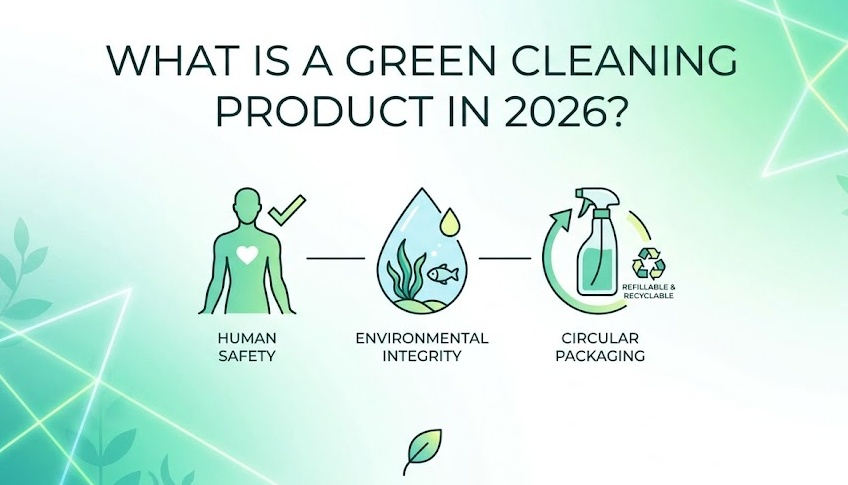
The definition of a truly green cleaning product has evolved significantly over the last few years. In the past, it simply meant a product was slightly better for the planet than a standard chemical cleaner. Today, a product must meet three specific criteria to be considered truly sustainable.
First, it must prioritize human safety. This means it is free from carcinogens, reproductive toxins, and respiratory irritants. Second, it must maintain environmental integrity. Every ingredient should be biodegradable and safe for aquatic life once it enters the water system. Finally, we must look at circular packaging. Thanks to the 2026 California SB 343 “Truth in Recycling” standards and similar laws across the country, companies are now being held accountable for their waste. A truly green product should use refillable containers, compostable materials, or plastic that is actually capable of being recycled in current municipal systems.
The Greenwashing Phrases That Mean Nothing
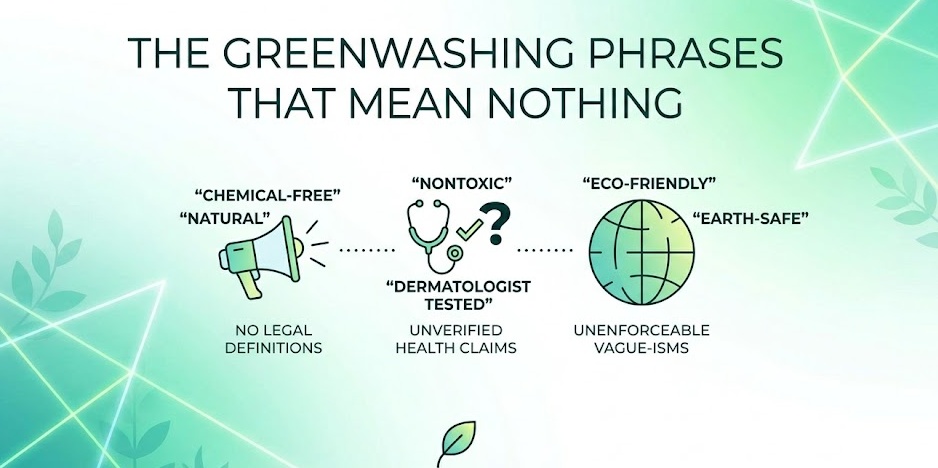
The easiest way for a company to greenwash a product is to use language that sounds impressive but lacks a legal definition. When you see these phrases, you should treat them as marketing rather than proof of safety.
- “Chemical-Free”: This is a scientific impossibility. Water is a chemical. Air is a chemical. When a brand uses this term, they are usually trying to appeal to a general fear of science rather than providing useful information.
- “Natural” or “All-Natural”: There is no federal standard for what constitutes a “natural” cleaner. Poison ivy is natural, but you would not use it to wash your windows. This word is often used to make petroleum-based products seem plant-based.
- “Dermatologist Tested”: This phrase only confirms that a doctor looked at the product. It does not mean the product passed any safety tests or that it is recommended for people with sensitive skin.
- “Eco-Friendly” or “Earth-Safe”: These are vague-isms. Without specific data to back them up, such as “bottled in 100 percent post-consumer recycled plastic,” these claims are legally hollow.
- “Nontoxic”: There is no third-party verification required to use this word. A product can be labeled nontoxic if it does not cause immediate death in lab testing, even if it causes long-term health issues.
Decoding the Vague Vocabulary: Marketing vs. Reality
Marketing teams are very careful with how they use certain words to suggest a higher quality than what is actually in the bottle. For instance, you will often see the phrase “plant-based” on a label. However, this is different from “plant-derived.” A product can claim to be plant-based even if only a tiny percentage of the ingredients come from plants, with the rest being standard synthetic chemicals.
Another major issue is the “fragrance” loophole. Under current trade secret laws, companies can list “fragrance” as a single ingredient. In reality, that one word can represent a mixture of thousands of undisclosed chemicals. Many of these are volatile organic compounds (VOCs) that degrade indoor air quality. Finally, check the claims about biodegradability. A product might be biodegradable in a laboratory setting over a century, but if it does not break down within 28 days in a natural environment, it can still pose a significant threat to local ecosystems.
Top 5 Ingredients to Exile in 2026
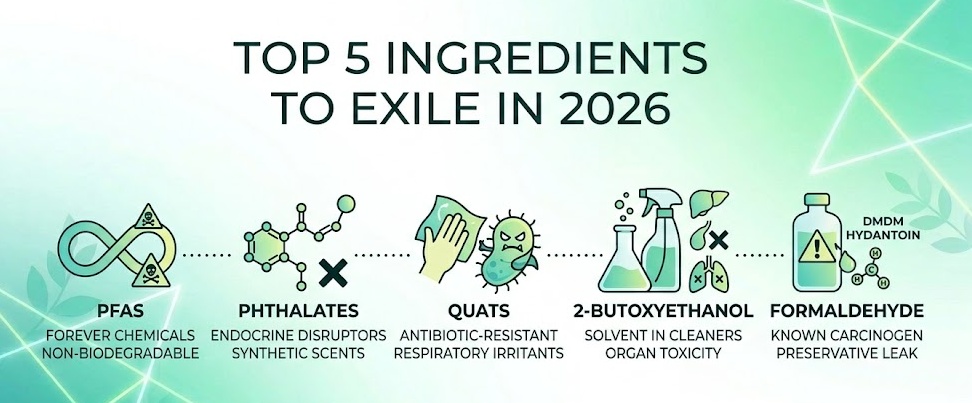
If you see these five ingredients or categories on a label, or if the brand refuses to disclose their absence, it is best to leave the product on the shelf.
- PFAS (The “Forever Chemicals”): In 2026, we are seeing a massive crackdown on these substances. These “Forever Chemicals” are often found in “stain-repellent” sprays and carpet cleaners. They do not break down in the human body or the environment.
- Phthalates: These are commonly found in synthetic scents. They act as endocrine disruptors, meaning they can mimic or interfere with the body’s natural hormones.
- Quaternary Ammonium Compounds (Quats): Often found in disinfecting wipes and sprays, these have been linked to respiratory issues and the rise of antibiotic-resistant “superbugs.”
- 2-Butoxyethanol: This is a powerful solvent used in many window and multipurpose cleaners. It can cause sore throats when inhaled and has been linked to liver and kidney damage in high concentrations.
- Formaldehyde-Releasers: Some preservatives, like DMDM hydantoin, slowly leak small amounts of formaldehyde into the air as they sit in your cupboard. Formaldehyde is a known carcinogen.
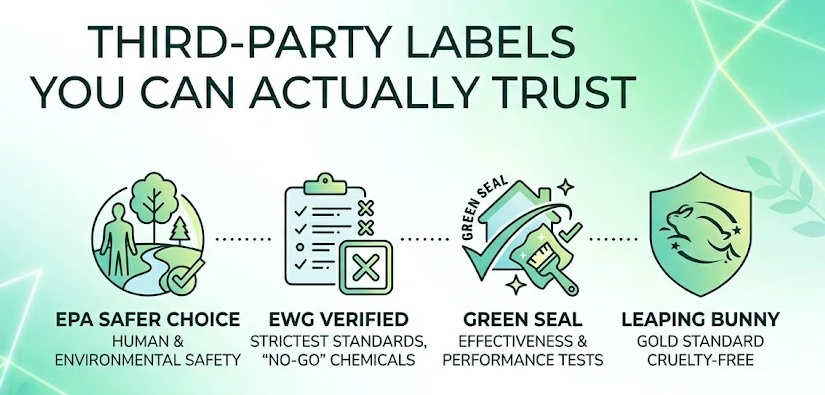
Third-Party Labels You Can Actually Trust
Since you cannot always trust a brand’s own marketing, you should look for independent certifications. These organizations put products through rigorous testing before allowing their seal to be used.
The EPA Safer Choice label is one of the most reliable for identifying products that are safe for both humans and the environment. For even stricter standards, look for the EWG Verified seal from the Environmental Working Group. They maintain a “No-Go” list of chemicals that are strictly prohibited in any product they endorse. Green Seal is another excellent certification because it tests for performance. It ensures that a green product will actually clean your house as effectively as a traditional one. If you care about animal welfare, the Leaping Bunny logo is the gold standard for cruelty-free testing.
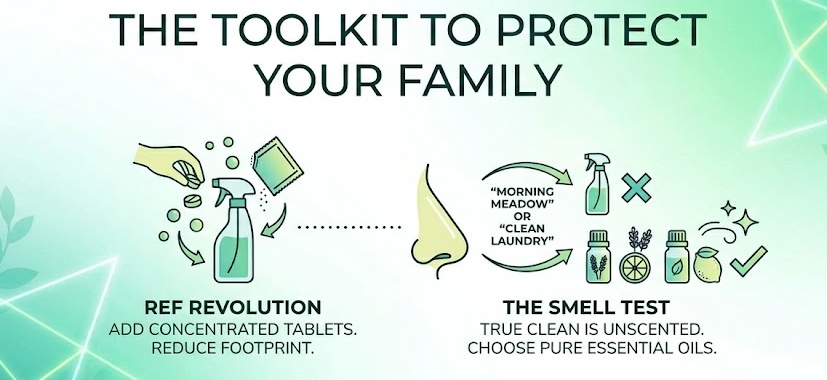
The Toolkit to Protect Your Family
Protecting your home does not require a chemistry degree. You can start by embracing the “Refill Revolution.” Instead of buying a new plastic bottle every month, look for brands that sell concentrated tablets or powders. This reduces the carbon footprint of shipping and minimizes the risk of microplastics leaching into the formula.
You should also use the “Smell Test.” If a product claims to smell like “Morning Meadow” or “Clean Laundry” but does not list specific essential oils like lavender or lemon, it is likely using synthetic pollutants. True cleanliness does not actually have a scent. It is simply the absence of dirt and odors.
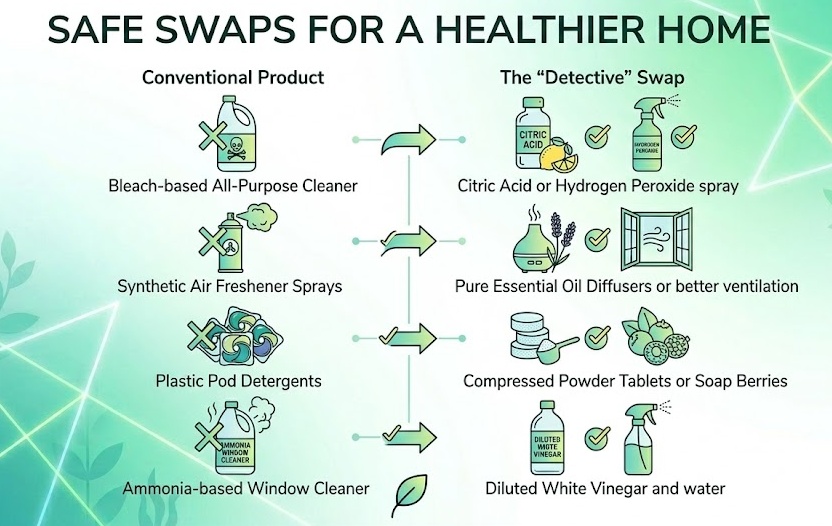
Conclusion: Voting with Your Sprayer
Every time you choose a transparent, truly green product over a greenwashed one, you are sending a message to the industry. When consumers demand full ingredient disclosure and circular packaging, corporations are forced to change their practices to remain competitive.
Being a greenwashing detective is about reclaiming control over what enters your living space. A clean home should not come at the cost of your respiratory health or the safety of the planet. By learning to read between the lines and looking for third-party verification, you can ensure that your cleaning routine is as safe as it is effective. Remember that “clean” is not a marketing aesthetic; it is a standard of safety that your family deserves.