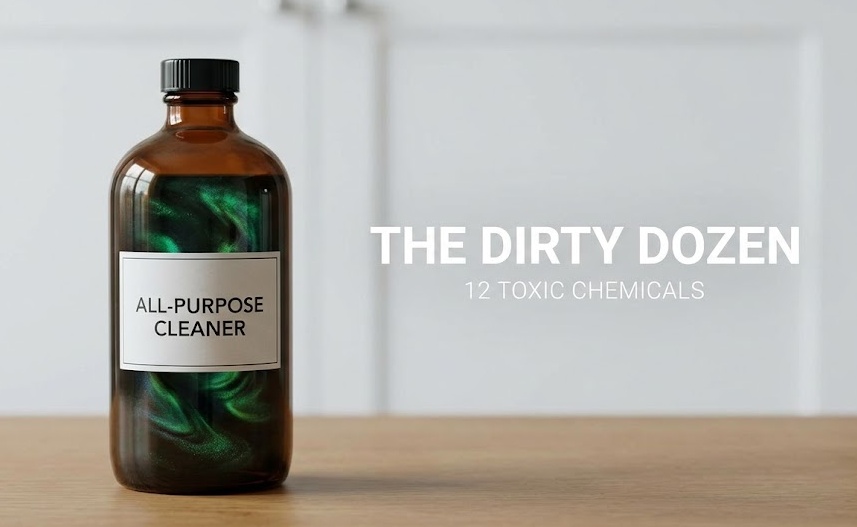
The 12 Toxic Chemicals Hiding in Your Cleaning Cabinet (The Dirty Dozen)
Most of us associate the sharp scent of lemon or the clinical smell of bleach with a job well done. We walk through our homes after a deep clean and feel a sense of accomplishment, believing we have created a sterile and safe environment for our families. However, scientific research into indoor air quality suggests a more complex reality. The indoor air of a freshly scrubbed house can sometimes contain a higher concentration of pollutants than the air outside a busy intersection. This paradox exists because many conventional cleaning agents rely on a cocktail of synthetic compounds that linger on surfaces and in the air we breathe long after the sponge is put away.
As a professional Oxford cleaning company, we believe that transparency is the first step toward a healthier home environment. Understanding the specific ingredients in your cleaning supplies is not just about being eco-friendly; it is about protecting your long-term physical health.
The following “Dirty Dozen” represent the most common toxic offenders currently found in standard household cleaners.
Identifying the Dirty Dozen

Phthalates
Phthalates are frequently found in products that list “fragrance” or “parfum” on the label. Because proprietary scent formulas are protected as trade secrets, companies are not required to disclose the specific chemicals used to create them. Phthalates are known endocrine disruptors, which means they can interfere with the body’s hormonal systems.

Triclosan
Commonly found in liquid dish soaps and products labeled as “antibacterial,” triclosan is an aggressive antimicrobial agent. Beyond the risk of contributing to antibiotic-resistant bacteria, it is highly toxic to aquatic ecosystems. When it washes down the drain, it can cause significant damage to the biological balance of local waterways.
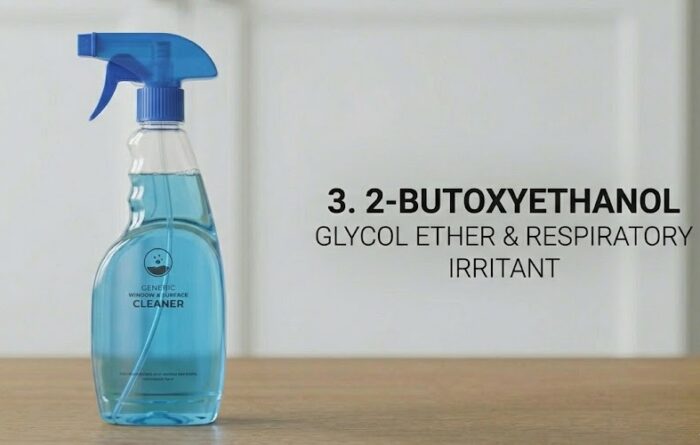
2-Butoxyethanol
This chemical 2-Butoxyethanol is a staple in many window, kitchen, and multipurpose sprays. It belongs to a category of glycol ethers. In addition to being a respiratory irritant, high levels of exposure have been linked to more severe issues such as liver and kidney damage.
Ammonia
Ammonia is a powerful volatile organic compound (VOC) found in glass cleaners and polishing agents. It is a notorious respiratory irritant that can trigger asthma attacks or chronic bronchitis in sensitive individuals. Furthermore, it creates a deadly gas if it is ever accidentally mixed with bleach.
Chlorine (Sodium Hypochlorite)
Found in bleach, toilet bowl cleaners, and laundry whiteners, chlorine is a potent disinfectant with significant downsides. It is a thyroid disruptor and a chronic respiratory irritant. Its persistence in the environment means it can accumulate in the food chain over time.
Sodium Hydroxide (Lye)
This highly corrosive substance is the active ingredient in most oven cleaners and drain openers. It can cause severe skin burns upon contact and is extremely dangerous if inhaled in a confined space, leading to permanent lung tissue damage.
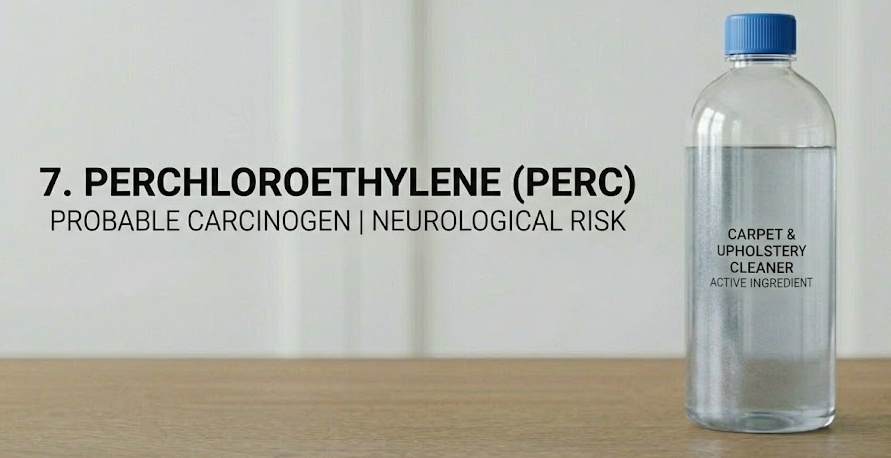
Perchloroethylene (PERC)
PERC is most commonly found in carpet cleaners, upholstery shampoos, and spot removers. It is classified as a probable human carcinogen. Frequent exposure can lead to neurological symptoms such as dizziness, loss of coordination, and headaches.

Quaternary Ammonium Compounds (Quats)
Found in fabric softeners and many disinfecting sprays, Quats are another class of antimicrobials that contribute to the rise of superbugs. They are also recognized as potent asthmagens, meaning they can cause asthma to develop in otherwise healthy individuals.
Ethanolamines (MEA, DEA, and TEA)
These are sudsing agents found in laundry detergents and creamy all-purpose cleaners. When these chemicals react with certain nitrates (which are often undisclosed contaminants), they can form nitrosamines, which are linked to cancer.
Formaldehyde
While it sounds like something reserved for a science lab, formaldehyde is often used as a preservative in dish soaps and furniture polishes. It is a known human carcinogen and a common cause of allergic skin reactions.
Nonylphenol Ethoxylates (NPEs)
NPEs are surfactants found in some industrial-strength detergents and degreasers. They are banned in many countries because they break down into nonylphenol, a chemical that mimics estrogen and disrupts the reproduction of fish and other aquatic life.
1,4-Dioxane
This is perhaps the most insidious of the dozen because it will never appear on an ingredient label. It is a byproduct of the manufacturing process for sudsing agents like Sodium Laureth Sulfate. It is a suspected carcinogen and is highly resistant to being filtered out of groundwater.
Reading Between the Lines on Product Labels
Navigating the cleaning aisle requires a skeptical eye. Many products use “greenwashing” tactics, employing leafy imagery or vague terms like “natural” and “earth-friendly” to imply safety. Unlike food labels, cleaning product manufacturers are not always legally required to list every ingredient on the bottle.
To protect your home, look for the “Warning” scale. Labels marked “Caution” indicate a lower level of toxicity, while “Warning” and “Danger” signify increasingly hazardous contents. Ideally, you should seek out products with third-party certifications such as the EPA Safer Choice seal or the EWG Verified mark. These organizations perform the rigorous testing that the average consumer does not have time to conduct.

Transitioning to a Safer Home
You do not have to replace every bottle in your cabinet overnight. A practical approach is to start with the products you use most frequently or those that cover the largest surface areas, such as floor cleaners and laundry detergents. Replacing these first will have the most immediate impact on your indoor air quality.
At Simply Clean Oxford, we have already done the vetting for you. Our commitment to using non-toxic, biodegradable products ensures that your home is cleaned to a professional standard without leaving behind a chemical footprint. Whether you choose to hire a professional service or manage the cleaning yourself, eliminating the “Dirty Dozen” is a powerful step toward a healthier lifestyle. Clean should be something you feel in the freshness of the air, not something that irritates your lungs.