Practical DIY Guides for Replacing Toxic Cleaners
In 2026, the marketing of sustainability has reached a fever pitch, making it harder than ever to distinguish between genuine safety and clever branding. Many aesthetic choices on cleaning bottles, like images of dew-covered leaves or bright green packaging, are designed to distract rather than inform. Because manufacturers are often allowed to omit full ingredient lists from physical labels, consumers are frequently forced to rely on vague claims that lack legal definitions. Reclaiming control over your living space begins by looking past the artwork and becoming a greenwashing detective. By moving from identifying bad products to creating your own effective solutions, you ensure that your home meets a standard of safety your family deserves.
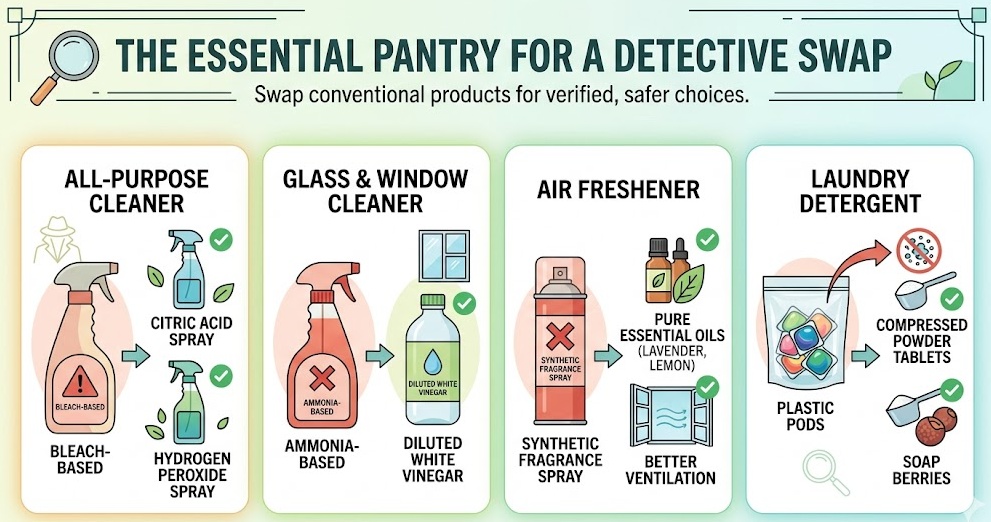
The Essential Pantry for a Detective Swap
The foundation of a safe home cleaning kit starts with replacing conventional, hazardous products with verified “detective” swaps. To replace bleach-based all-purpose cleaners, you can use citric acid or hydrogen peroxide sprays. For window and glass cleaning, diluted white vinegar and water serve as a powerful replacement for ammonia-based products. If you prefer a scented home, it is vital to avoid synthetic air freshener sprays and the fragrance loophole. This single word can represent a mixture of thousands of undisclosed chemicals, including volatile organic compounds that degrade indoor air quality. Instead, choose pure essential oils like lavender or lemon, or simply focus on better ventilation. Finally, swap out plastic pod detergents for compressed powder tablets or soap berries to minimize the risk of microplastics leaching into the formula.
Safety First: Managing Your Chemical Transition
When you decide to exile ingredients like PFAS, phthalates, or quaternary ammonium compounds from your home, you must handle the transition with care. If you still have conventional products in your cupboard, do not simply pour them down the drain, as every ingredient should be biodegradable and safe for aquatic life. Check your local municipal guidelines for hazardous waste disposal to maintain true environmental integrity.
Most importantly, never mix your new DIY solutions with old conventional cleaners. For instance, mixing a vinegar or citric acid spray with a bleach-based cleaner can create toxic fumes. To protect your respiratory health, ensure that surfaces are thoroughly rinsed of old chemical residues before applying your new, safer alternatives.
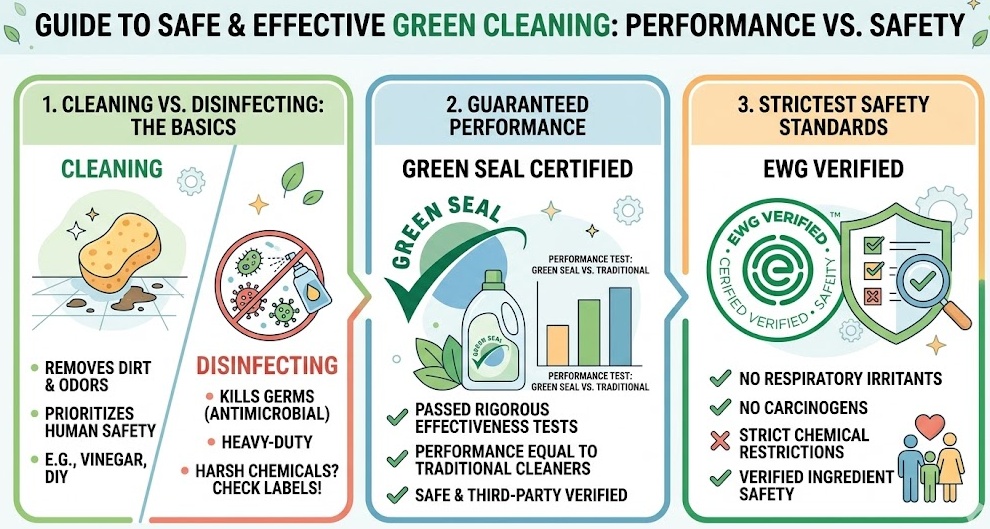
Defining Performance: Cleaning Versus Disinfecting
As you master these swaps, it is helpful to understand the difference between cleaning and disinfecting. Truly green products should prioritize human safety by remaining free from respiratory irritants and carcinogens. While DIY solutions like vinegar are excellent for removing dirt and odors, they may not meet the same antimicrobial standards as heavy-duty disinfectants. If you need a product that is guaranteed to perform as effectively as a traditional cleaner while remaining safe, look for the Green Seal certification. This third-party label ensures that a product has passed rigorous effectiveness and performance tests. For those concerned about specific “no-go” chemicals, the EWG Verified seal provides some of the strictest standards available today.
Verifying the Circular Economy
The hardware you use for your DIY swaps is a critical part of the 2026 sustainability standard. Under the California SB 343 “Truth in Recycling” standards and similar laws across the country, companies are now being held more accountable for their waste. Embracing the refill revolution means moving away from buying a new plastic bottle every month. Using concentrated tablets or powders to mix your own solutions reduces the carbon footprint of shipping and minimizes plastic waste. However, a greenwashing detective must verify these claims locally. A product is only truly circular if it uses materials that are actually capable of being recycled in current municipal systems. Always check your local recycling capabilities rather than relying on vague-isms like “earth-safe” or “eco-friendly”.

Adjusting Your Expectations for a True Clean
Transitioning to DIY swaps requires a shift in how we perceive cleanliness. Many conventional products use synthetic chemicals to create artificial suds or lingering scents that suggest a higher quality than what is actually in the bottle. Remember – an ethical green cleaning company will tell you that true cleanliness does not actually have a scent; it is simply the absence of dirt and odors. Plant-based ingredients may behave differently than synthetic ones, but they are significantly safer for your family’s long-term health. By learning to read between the lines and demanding full ingredient disclosure, you reclaim control over your home environment.
What specific area of your home, such as the kitchen or a nursery, would you like to focus on for your first round of safe DIY swaps?